Introduction
A hardware wallet like the Trezor protects your cryptocurrency by keeping your private keys offline in a secure device. This guide walks through the full setup process — unboxing, initializing a new device, creating a recovery seed (backup), using Trezor Suite, and best practices to keep your funds safe. The steps here apply to the Trezor One and Trezor Model T with minor UI differences.
What you’ll need
- New Trezor device (Trezor One or Model T)
- A computer with an up-to-date browser and USB port
- Internet access for downloading Trezor Suite
- Pen and paper for writing down your recovery seed (do not store it digitally)
Step 1 — Unbox and inspect
When you receive a Trezor device, inspect the packaging and tamper-evident seals. Trezor ships devices in sealed boxes; if anything looks tampered with, contact support and do not proceed with setup. Remove the device and accessories from the box and keep the packaging in case you need to return it.
Step 2 — Connect and open Trezor Suite
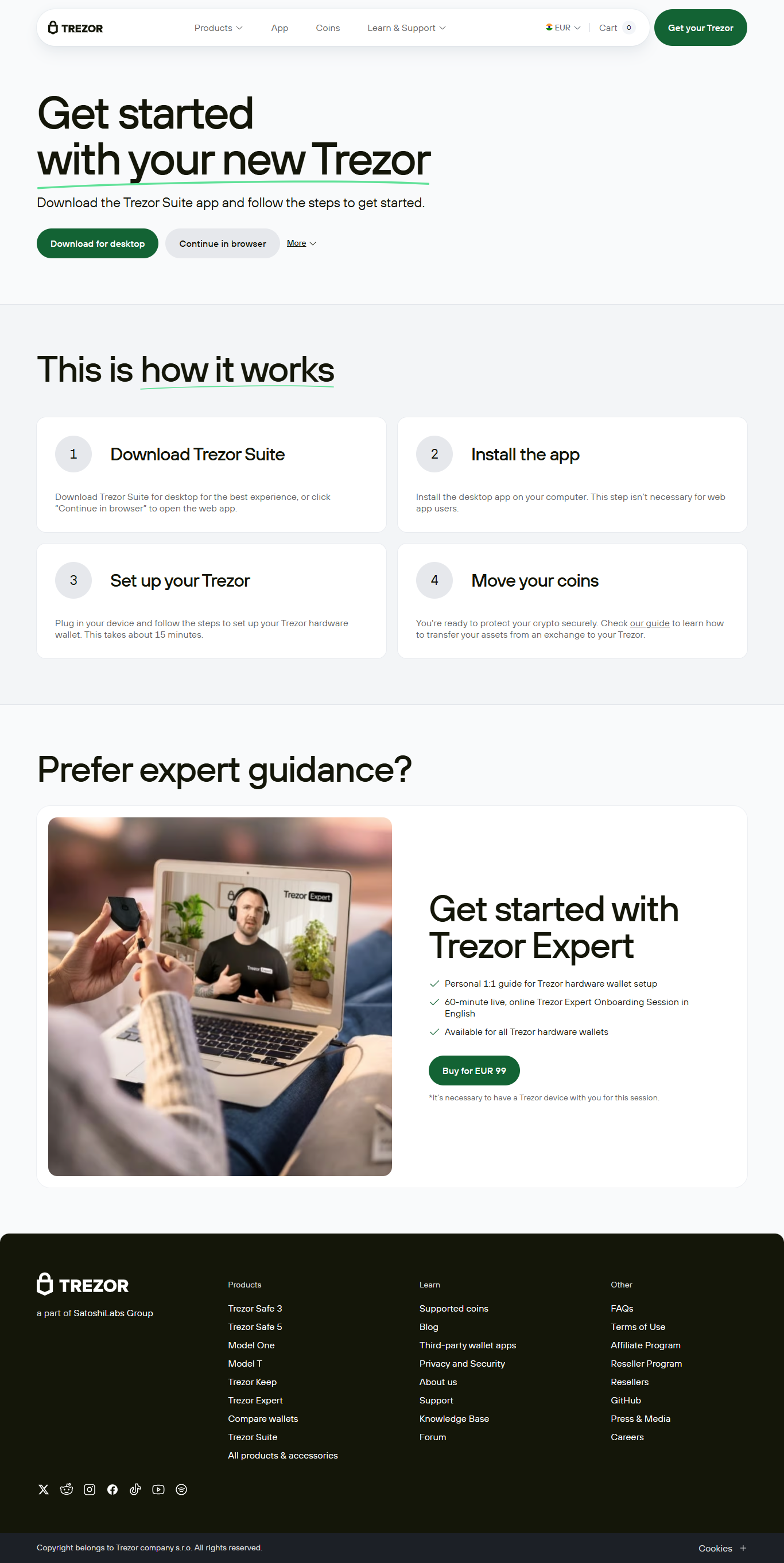
Visit the official Trezor website and download Trezor Suite (desktop or web). Always download from the official source to avoid counterfeit or malicious software. Connect the device to your computer via USB. On first connection the device will display a welcome screen and ask you to visit Trezor Suite.
Step 3 — Firmware check and update
Before initializing, Trezor will verify whether the firmware is up to date. The device may prompt you to install the latest firmware — follow on-screen instructions in Trezor Suite. Installing firmware directly from Trezor Suite ensures authenticity and security.
Step 4 — Create a new wallet
In Trezor Suite choose “Create new” or “Initialize” to set up a brand-new wallet. You will be guided through naming your device and creating a PIN code. Choose a PIN that is long and memorable but not trivially guessable. The PIN protects access to your Trezor if it’s lost or stolen.
Step 5 — Write down your recovery seed
The recovery seed (usually 12, 18, or 24 words depending on model and settings) is the most important piece of information for recovering funds if your device is lost, stolen, or damaged. Write the words exactly as shown and in the correct order on paper — do not photograph them, do not store them in cloud storage, and do not type them into your computer. Trezor will ask you to confirm some of the words to guarantee that you wrote them correctly.
Step 6 — Confirm and finish setup
After confirming the recovery seed and PIN, the initialization completes. The device will show it is ready. You can now add accounts for different cryptocurrencies inside Trezor Suite and start receiving assets to addresses created by your device.
Step 7 — Adding accounts & receiving funds
Use Trezor Suite to add accounts for Bitcoin, Ethereum and other supported coins. Always verify addresses on your Trezor device screen before receiving funds — checking on-device ensures the address wasn’t altered by malware on your computer.
Security best practices
- Never share your recovery seed with anyone. Trezor will never ask for it over email or support chats.
- Store your seed in multiple secure physical locations if you want redundancy (e.g., safe deposit box, fireproof safe).
- Use a strong PIN and consider using passphrase protection (advanced users) for an additional layer of security.
- Keep firmware and Trezor Suite up to date. Official updates include security fixes and improvements.
- Be cautious of phishing sites. Bookmark the official Trezor website and never follow links from suspicious emails.
Troubleshooting common issues
If Trezor Suite doesn’t detect your device, try a different USB cable or port, and ensure your browser allows WebUSB if you use the web version. If firmware installation fails, reconnect and retry. For persistent issues, consult Trezor support resources.
Advanced: Using passphrases and hidden wallets
Trezor supports an optional passphrase feature that derives an additional wallet from your seed. This can create hidden wallets that only open when the passphrase is entered. Use passphrases carefully: if you forget the passphrase you cannot access the hidden wallet. Keep a separate, secure record of passphrases if you choose to use them.
Backup strategies
The recovery seed is the ultimate backup. Some advanced users split their seed across multiple physical backups or use secret-sharing schemes — these methods are powerful but complex. For most users, the safest approach is to store a clear, single copy in a secure physical location and consider a secondary copy in a different secure location.
Maintaining long-term security
Periodically verify that your backup is still readable and intact. Keep a record of the device model and firmware version. If you need to pass access to heirs or executors, prepare clear instructions alongside the seed stored in a sealed and secure place.
Frequently asked questions (FAQ)
- Q: Can someone steal my crypto if they steal my Trezor?
- A: Not without your PIN and recovery seed. If they don’t know your PIN and you used a secure PIN, your funds remain protected. If you fear the device is compromised, transfer funds to a new wallet and set up a new seed.
- Q: Is it safe to store the seed on a USB drive?
- A: No. Digital storage of seeds is risky due to malware and remote attackers. Always prefer physical backups.
- Q: What if I forget my PIN?
- A: Trezor allows a limited number of PIN attempts. If you forget it, you must restore from your recovery seed on a new device to regain access to funds.
Wrapping up
Setting up a Trezor hardware wallet is the most effective way to protect your crypto assets from remote theft. Take the time to follow the steps, write the recovery seed carefully, and adopt safe backup and storage practices. With those in place, you’ll have a secure, long-term solution for managing private keys and crypto assets.